A dead phone or a dark tent isn't a big deal for one night. On a multi-day trip, it's the difference between running your camp kitchen and packing up early. A portable power station is the fastest way to close that gap.
Why Bring a Power Station in the First Place
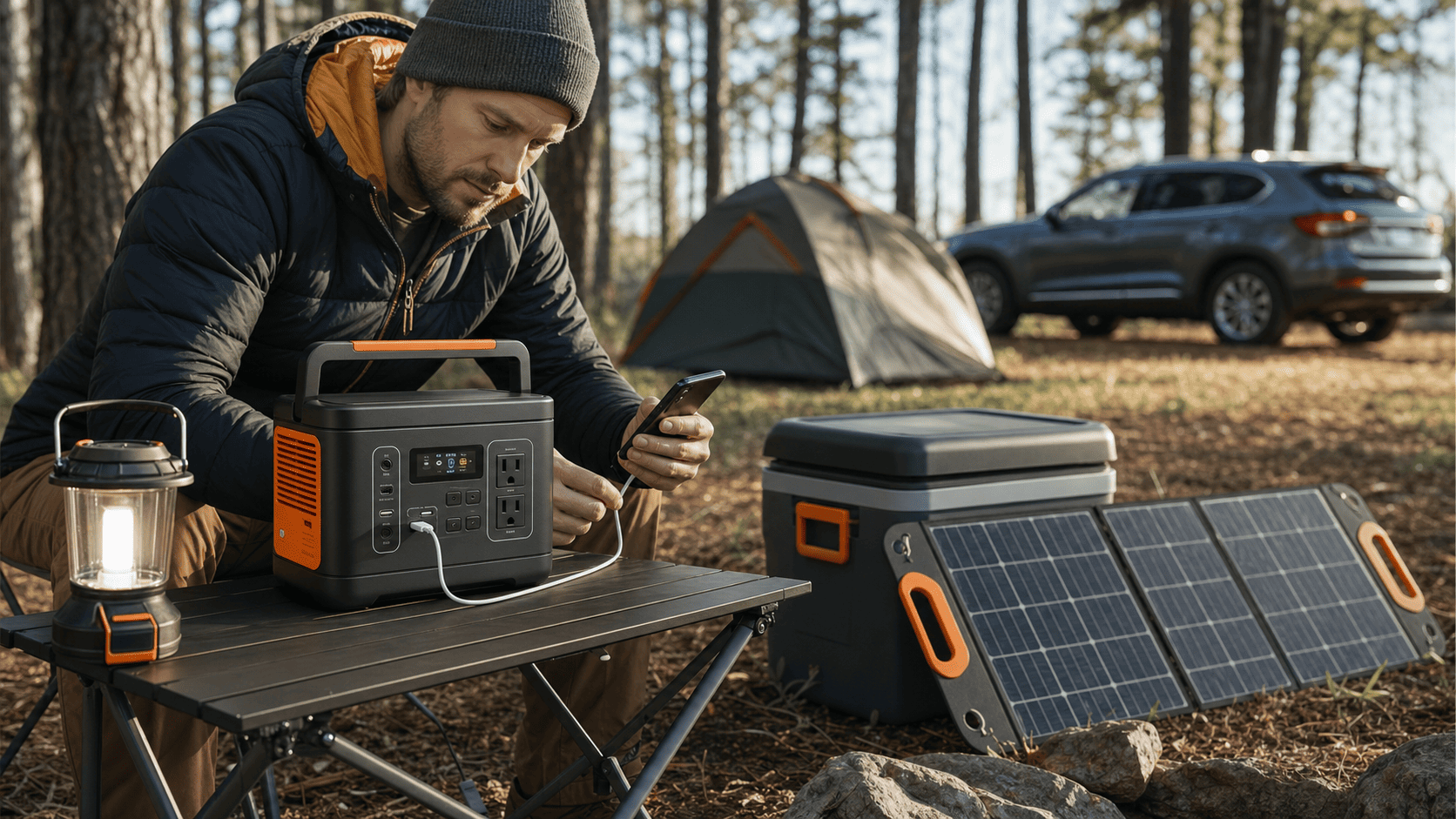
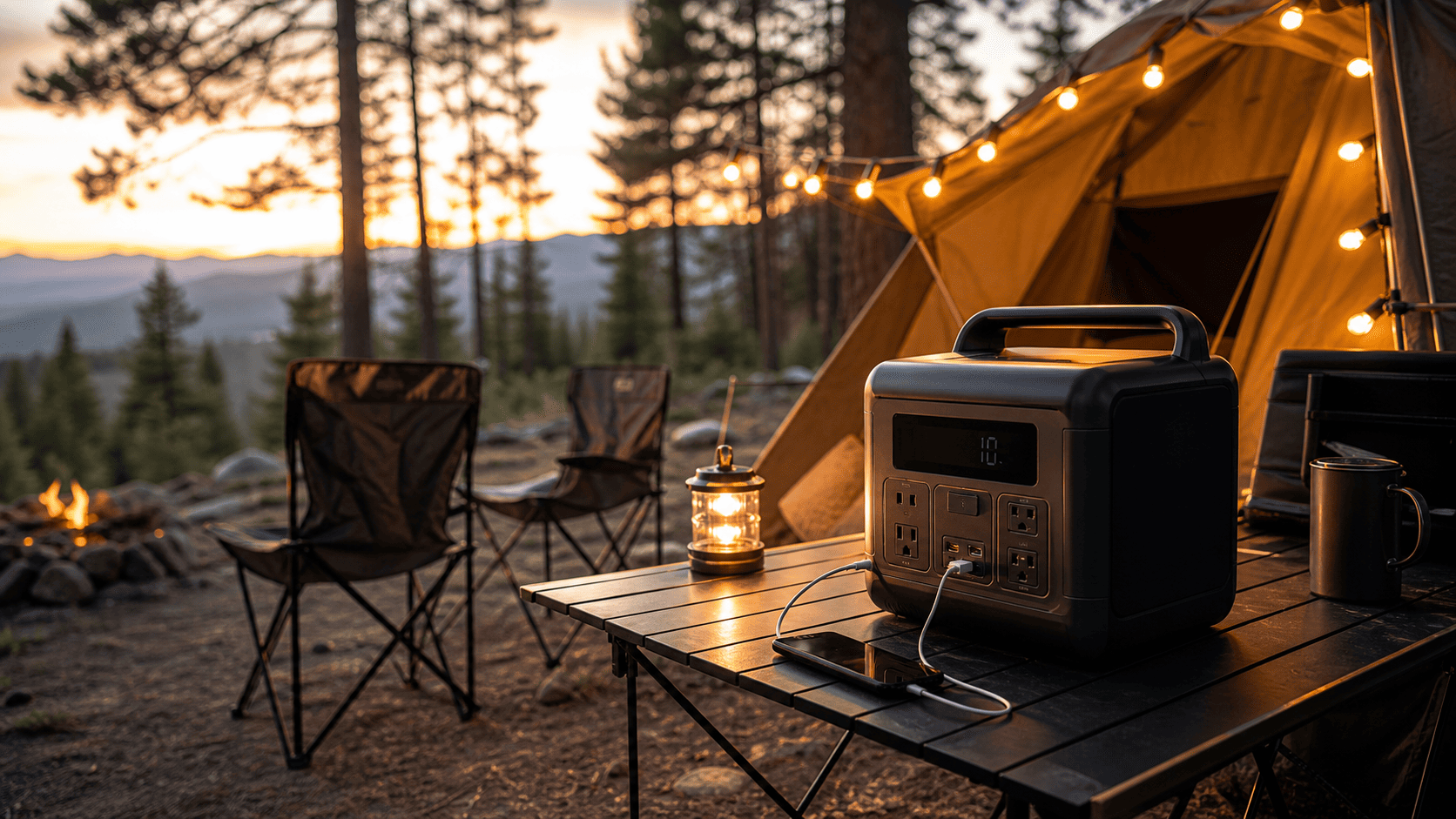
Car batteries and disposable lantern batteries only get you so far. A portable power station is a rechargeable battery bank with real AC outlets, USB ports, and often a 12V socket — enough to run a mini-fridge, charge laptops and camera gear, power a CPAP machine overnight, or keep string lights going without hunting for a wall outlet.
Unlike a gas generator, it's silent, produces no fumes, and can sit right next to your tent. Pair it with a solar panel and it becomes a genuinely off-grid setup — charge during the day, run your gear at night, repeat for as long as the trip lasts.
Sizing Capacity to Your Trip
The spec that matters most is capacity, measured in watt-hours (Wh) — think of it as the size of the fuel tank. The second number that matters is output, measured in watts (W) — that's how much the station can deliver at once, which determines what you can actually plug in.
- Phones, lights, and small electronics — a 300-600Wh station with 300-600W output covers a weekend of light use.
- Mini-fridge, coffee maker, CPAP — look for 1,000Wh+ capacity and at least 1,800W of output to run one at a time without tripping the unit.
- Multi-day base camp with several appliances running together — 2,000Wh or more, ideally with an expansion battery option so you can add capacity later instead of buying a bigger unit upfront.
A simple rule of thumb: add up the watt-hours you expect to use per day, then pick a station with at least that much capacity — plus a margin for the nights you can't recharge with solar.
Bigger capacity almost always means more weight. A 300Wh station you can toss in a backpack won't run a mini-fridge overnight, and a 2,000Wh unit that runs your whole camp kitchen isn't something you want to carry a mile down a trail. Match the size to how you actually camp, not the biggest number on the shelf.
What Else to Look For
Recharge speed
Look at both AC recharge time (plugging into a wall before you leave) and solar input wattage (how fast it tops off from a panel during the day). Faster AC charging matters most if you're topping off between trips; solar input matters most if you're relying on the sun to keep the station going for several days straight.
Weight and portability
Anything you're carrying from a car to a campsite by hand should stay under roughly 25-35 lbs unless you're prepared to make two trips. If it's staying in the van or truck bed the whole time, weight matters far less than capacity.
Weatherproofing
Not every station is rated for outdoor exposure. An IP-rated case adds real peace of mind if it's going to sit outside your tent overnight rather than tucked under an awning.
Battery chemistry
Most current models use LiFePO4 (LFP) batteries, which last several thousand charge cycles — years of regular camping trips — versus the shorter lifespan of older lithium-ion packs.
Bluetti vs. EcoFlow: Top Picks for Campers
Bluetti and EcoFlow are two of the most established names in portable power, and both make strong camping-specific options. Here's how four current models stack up.
AC180
1,152Wh capacity with 1,800W output (2,700W surge) and an 0-80% recharge in about 45 minutes. A strong all-rounder for a weekend base camp running a fridge, lights, and a few devices at once.
Elite 100 V2
1,024Wh capacity, 1,800W output (3,600W surge), and noticeably lighter than the AC180 at around 25 lbs. The pick if you're carrying the unit any real distance from the car to your site.
River 3
A compact, budget-friendly entry point built for phones, lights, and small electronics. Light enough to genuinely carry to a tent site, with weather-resistant housing for outdoor use.
Delta 3 Plus
1,024Wh capacity with 1,800W output (2,200W with X-Boost) and expandable up to 5kWh with add-on batteries — a good choice if your power needs are likely to grow over time.
These are affiliate links. If you buy through them, we may earn a small commission at no extra cost to you — it doesn't change the price you pay, and it's the same recommendation we'd make either way. Full details in our affiliate disclosure.
Matching the Station to How You Camp
- Car or RV camping — capacity and output matter more than weight since the unit stays near the vehicle. The AC180 or Delta 3 Plus cover most setups here.
- Backpacking or hike-in sites — prioritize weight and a compact footprint. The Elite 100 V2 or River 3 are easier to carry any real distance.
- Van life or long-term off-grid living — expandability matters most, since your power needs tend to grow. Look for a station with an add-on battery option rather than buying the biggest single unit upfront.
The Bottom Line
There's no single "best" portable power station — there's the one that matches how much power you actually need and how far you have to carry it. Start by adding up what you plan to run each day, pick a station with enough headroom above that number, and let weight and portability be the tiebreaker between models that are otherwise close on capacity.