"How big a power station do I need?" is one of the most common questions in camping gear forums — and it almost always comes down to one number: watt-hours.
Why Watt-Hours Are the Number That Matters
Portable power stations are usually marketed by their watt-hour (Wh) capacity — a 300Wh unit, a 1,000Wh unit, and so on. This single number tells you roughly how much total energy the unit can store and dispense before needing a recharge, regardless of what you're plugging into it.
The trap most first-time buyers fall into is picking a power station based on price or brand recognition alone, without first figuring out what their actual camping trip demands in watt-hours. A unit that's perfect for charging phones and running a fan all weekend might not get through a single night powering a portable fridge.
Calculating Your Daily Usage
The math is simpler than it looks. For each device, multiply its wattage by the number of hours you'll run it per day, then add everything together:
- Phone charger (18W) × 2 hours = 36Wh
- LED lantern (5W) × 6 hours = 30Wh
- Portable fan (25W) × 4 hours = 100Wh
- CPAP machine (40W) × 8 hours = 320Wh
Adding those up gives a daily total of roughly 486Wh in this example. That's the minimum capacity you'd want for a single day without recharging — and in practice, most people add a buffer on top of that for inefficiency and unexpected use.
1200 × 700px
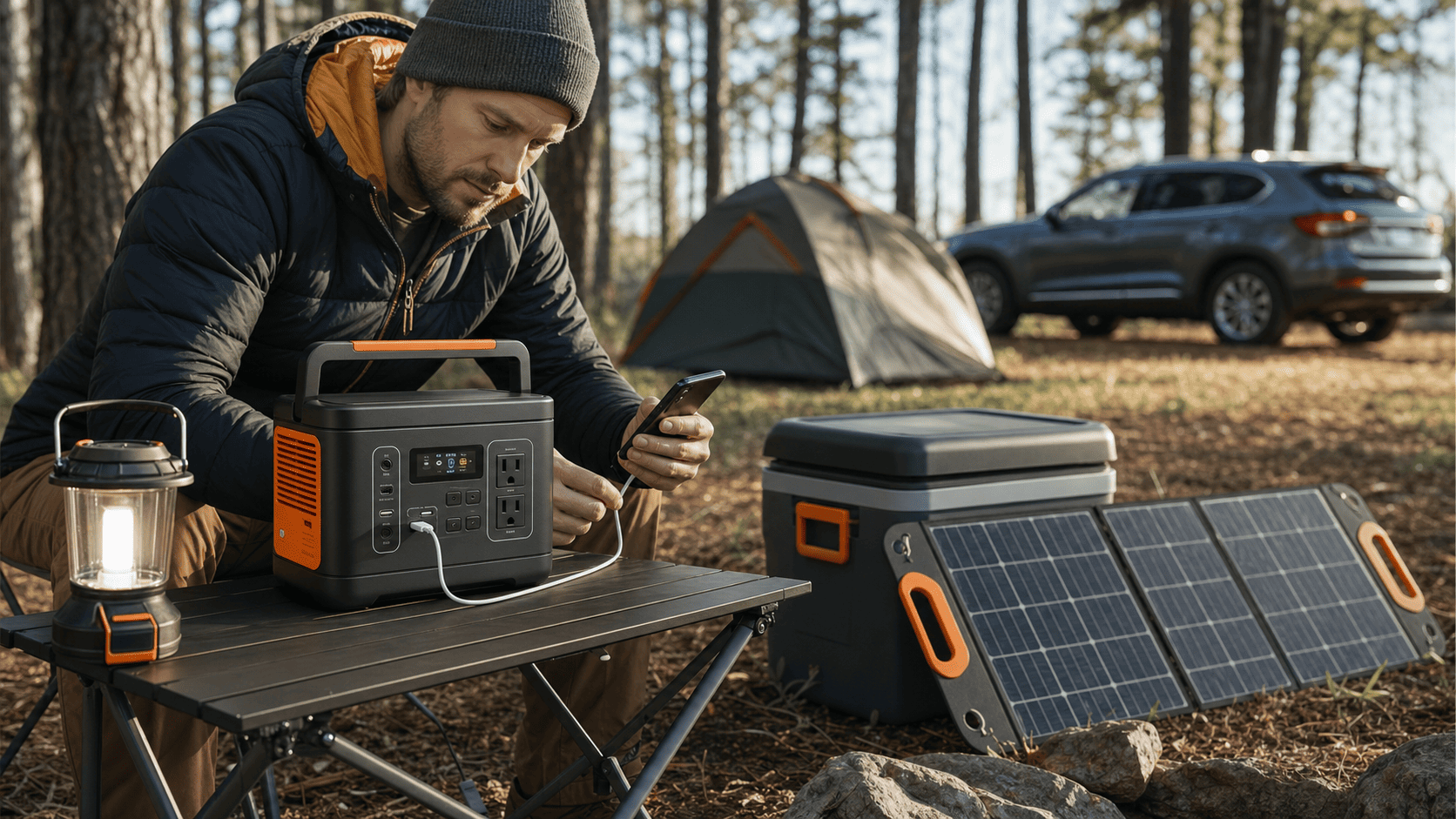
A mid-size power station running lights, a fan, and charging devices at a campsite.
Matching a Power Station to Your Numbers
Once you know your daily watt-hour need, look for a power station rated comfortably above that number — not right at it. Batteries lose some usable capacity to internal conversion losses, and running a unit down to empty every single night shortens its lifespan over time.
As a rough guide:
- Under 300Wh — good for phones, lanterns, and short weekend trips with light device use.
- 300–800Wh — comfortable for fans, larger lights, laptop charging, and multi-day trips.
- 800–1,500Wh+ — needed for portable fridges, CPAP machines, or powering multiple devices across several days without sun or a vehicle to recharge from.
A device's "rated wattage" is what it draws while running — but some devices, especially compressors in fridges and coolers, briefly draw much more on startup. Check a power station's surge or peak wattage rating, not just its continuous rating, if you're running anything with a motor.
Factors That Change the Math in the Real World
The calculation above assumes ideal conditions, but a few real-world factors tend to push actual usage higher than planned:
- Cold weather — batteries store and deliver less usable energy in low temperatures, and devices like fridges work harder to maintain temperature.
- Inverter losses — converting battery power to AC for standard plugs wastes a small percentage of energy as heat.
- Longer trips without recharging — if you won't have solar or a vehicle to top up the battery, your capacity needs to cover every day of the trip, not just one.
A Simple Example to Sanity-Check Your Plan
Say you're planning a three-day trip with no charging in between: lanterns, phone charging, and a fan, totaling around 150Wh a day. Over three days that's 450Wh of total consumption. A power station rated around 500–600Wh would cover that trip with a reasonable buffer, while anything closer to 1,000Wh would leave plenty of room to spare — useful if your plans change or the trip runs longer than expected.
Running the numbers before you buy is a five-minute exercise that saves a lot of frustration compared to guessing and finding out you're short on power halfway through a trip.