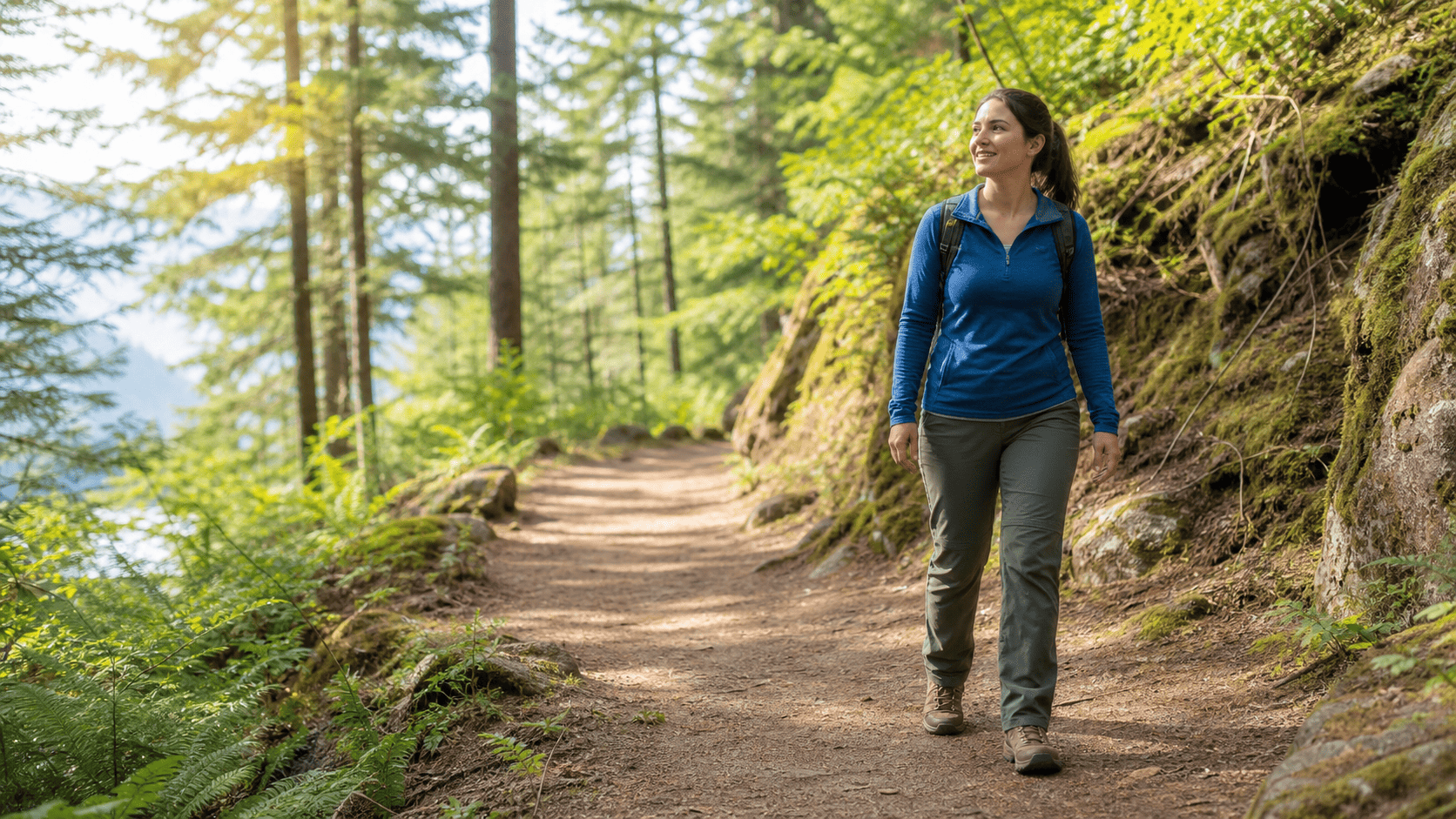
Every experienced hiker was a first-timer once. The trips that go well usually come down to a handful of decisions made before you ever step on the trail — not luck.
Pick a Trail That Matches You, Not Instagram
The single biggest mistake first-time hikers make is choosing a trail based on the view instead of the distance and elevation gain. A trail description that says "moderate, 8 miles, 2,000 ft elevation gain" is a very different day out than "easy, 3 miles, 300 ft elevation gain" — even if both photos look equally stunning online.
Start with something short and well-trafficked. A 2-4 mile loop with modest elevation gain is enough to learn how your body handles distance, your pack, and your footwear, without turning a rough first outing into the reason you never go again.
- Check recent trail reports — conditions change with weather and season, and a review from three years ago won't tell you about a washed-out bridge or overgrown section.
- Know the elevation profile, not just the total distance. A flat 6 miles and a steep 6 miles are not the same hike.
- Pick an out-and-back over a loop for your first few hikes — it's easier to turn around partway if you're tired, cold, or behind schedule.
What Goes In Your Day Pack
You don't need to carry everything the internet's "ten essentials" lists demand for a two-hour trail near home, but a first-timer's pack should cover the basics: navigation, water, food, a layer, light, and a way to handle small emergencies.
- Navigation — a downloaded offline map or a physical trail map; don't rely on cell signal.
- Water — at minimum half a liter per hour of hiking, more in heat.
- Snacks — something with protein and carbs, not just sugar that spikes and crashes.
- An extra layer — trail temperatures drop fast once you stop moving or the sun dips.
- A headlamp or flashlight — even on a day hike, in case you're out later than planned.
- A basic first aid kit — blisters and small scrapes are the most common issues by far.
Pack weight adds up fast. Lay everything out before you leave and ask honestly whether each item earns its spot for the specific trail you're doing — a 3-mile loop near a parking lot doesn't need the same kit as a remote, hours-long trail.
Footwear and Clothing Basics
Break in your shoes first
Trail runners or hiking shoes that haven't been worn before are one of the most common causes of a miserable first hike. Wear whatever you plan to hike in for a few walks around your neighborhood first, so you know where they rub before you're miles from the car.
Skip the cotton
Cotton holds onto sweat and rain and stays wet, which gets cold fast. Synthetic or wool base layers dry faster and keep you more comfortable through temperature swings.
Dress in layers
A moisture-wicking base layer, an insulating mid layer, and a packable rain shell cover most conditions without overpacking. You can add or shed layers as your body temperature changes throughout the hike.
Water, Food, and Pacing
New hikers often either sprint the first mile and burn out, or under-drink because they don't want to stop for a bathroom break. Both backfire. A steady, conversational pace you can hold for hours beats a fast pace you can only hold for twenty minutes.
- Sip water regularly rather than waiting until you're thirsty — thirst is already a sign you're a little behind.
- Eat something every couple of hours, even if it's just a handful of trail mix, to keep your energy steady.
- Take short breaks rather than one long one — it keeps your muscles from stiffening up.
Weather, Wildlife, and Telling Someone Your Plan
Check the weather forecast for the trailhead's elevation, not just the nearest town — mountain weather can be dramatically different and change quickly. If thunderstorms are likely, plan to be off any exposed ridgeline well before they typically roll in.
Look up what wildlife is common on your specific trail and how to respond — bear safety in bear country, snake awareness in warmer climates, and so on. Most encounters are avoided simply by making some noise as you walk and keeping food sealed.
Before you leave, tell someone your planned route and your expected return time. It costs nothing and is the single most useful thing you can do if something goes wrong and you need help found faster.
A Few Coleman Picks Worth Packing
Coleman's hiking and camping lineup covers most of the day-pack basics above without a steep learning curve. A few worth considering for a first-time hiker's kit:
Mt. Trek Hiking Daypack
A comfortable, well-organized daypack sized for a first hiker's essentials — water, snacks, a layer, and a first aid kit — without the bulk of a full backpacking pack.
Peak1 450L Recharge Headlamp
A rechargeable, hands-free headlamp with adjustable brightness — cheap insurance for the day hikes that run a little longer than planned.
All Purpose Basic First Aid Kit (205-Piece)
A compact, soft-sided kit covering the blisters, scrapes, and small cuts that come up most often on a trail — light enough to sit in a daypack without a second thought.
These are affiliate links. If you buy through them, we may earn a small commission at no extra cost to you — it doesn't change the price you pay, and it's the same recommendation we'd make either way. Full details in our affiliate disclosure.
The Bottom Line
A good first hike isn't about proving anything — it's about coming home wanting to do it again. Pick a trail sized for where you actually are, pack the basics instead of everything, dress in layers, pace yourself, and let someone know where you'll be. Everything else you'll pick up the more you get out there.