When the power goes out, a reliable backup source can make a real difference — whether you're riding out severe weather, heading off-grid for a trip, or just want a bit more flexibility at home.
Modern battery power stations offer more flexibility than traditional generators. Many can be recharged through standard wall outlets, solar panels, or other compatible charging methods, and some provide enough output to support selected household appliances.
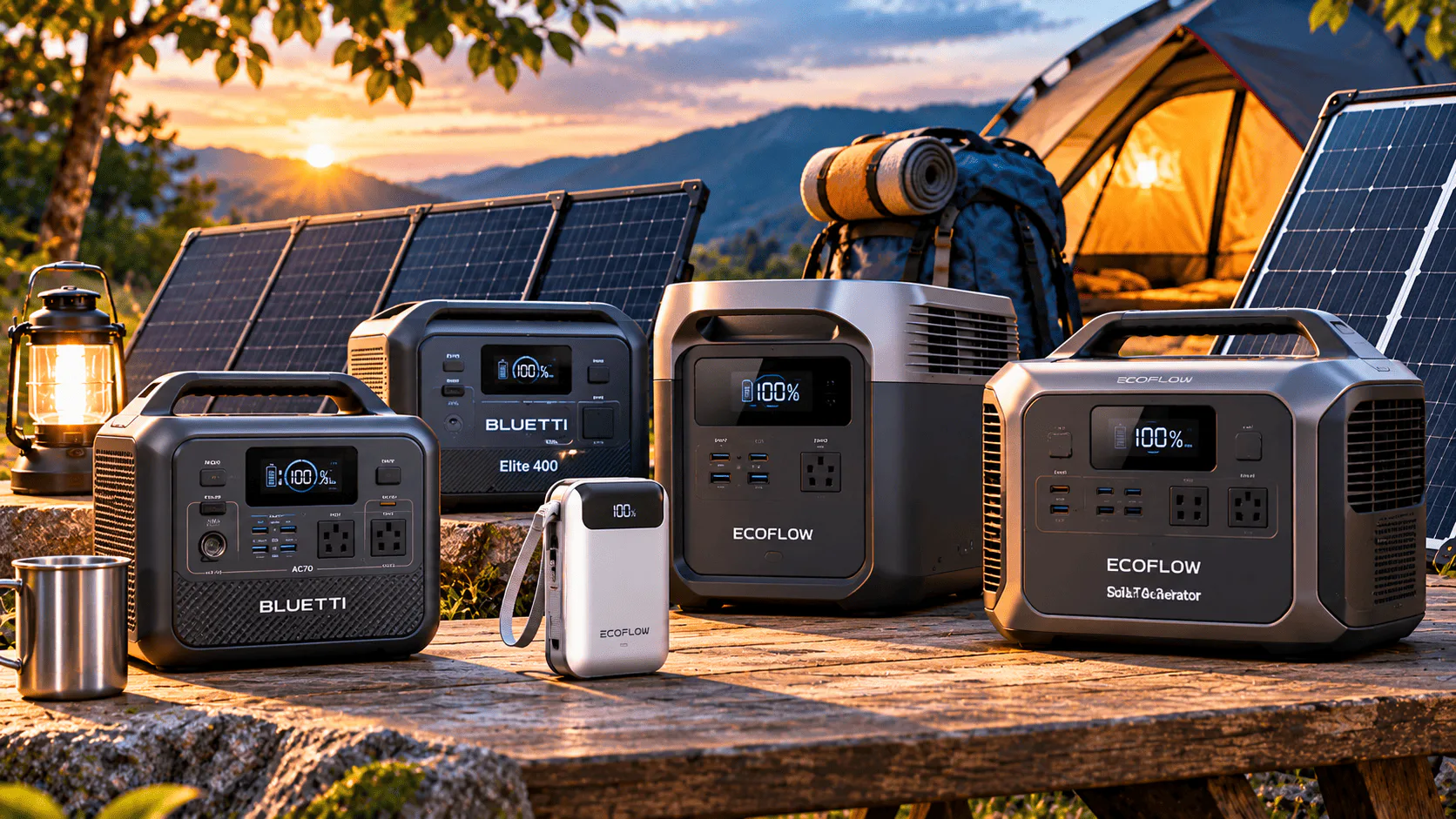
In this guide, we're looking at six portable power and solar charging products from BLUETTI and EcoFlow — compact charging solutions, expandable battery systems, and higher-capacity power stations designed for different needs. Rather than choosing based on capacity alone, consider what you actually need to power, how long you need it to run, and whether you'll have access to a way to recharge the battery.
This guide includes both complete power stations and supporting charging products. The solar panel bundle and compact power bank are not standalone household power stations, so they're identified separately below.
6 BLUETTI & EcoFlow Products Worth Considering

AC70 Portable Power Station
768Wh battery capacity, 1,000W rated output, Power Lifting Mode, and LiFePO₄ battery chemistry — a practical starting point for camping, home backup, and off-grid activities. Expandable up to 1,574Wh.

350W Solar Panel Bundle
Three 350W panels (1,050W combined per the listing) for recharging compatible BLUETTI power stations via sunlight — a useful option during extended outages or for larger off-grid solar setups.

Elite 400 + 350W + Charger Bundle
High-efficiency charging, ultra-low standby power draw, and smart app control, bundled with a 350W solar panel and charger — worth a look for buyers who want battery storage and solar charging in one purchase.

DELTA 3 Max Series
A larger 2,048Wh battery capacity for households that need to support several devices over a longer period — worth considering if you want more headroom than a compact camping battery provides.

RAPID 3-in-1 Power Bank
A 10,000mAh battery, retractable USB-C cable, and foldable AC plug in one compact device, with 45W high-speed charging and a digital battery-level display. A personal electronics power bank, not a household power station.

DELTA 3 Max Solar Generator
2,048Wh battery, 2,400W output (up to 4,800W surge), and X-Boost support for select heavy-duty appliances. Four charging methods, with wall or generator charging to 80% in about 68 minutes per the listing.
These are affiliate links. If you buy through them, we may earn a small commission at no extra cost to you — it doesn't change the price you pay, and it's the same recommendation we'd make either way. Full details in our affiliate disclosure.
Quick Comparison: Which Backup Power Solution Should You Consider?
| Product | Listed capacity / rating | Best use |
|---|---|---|
| BLUETTI AC70 | 768Wh / 1,000W | Camping and smaller home backup needs |
| BLUETTI 350W Solar Panel Bundle | 3 × 350W / 1,050W combined | Solar charging |
| BLUETTI Elite 400 Bundle | Not specified in supplied description | Portable backup and solar charging |
| EcoFlow DELTA 3 Max Series | 2,048Wh | Higher-capacity backup |
| EcoFlow RAPID Power Bank | 10,000mAh / 45W | Phone and personal device charging |
| EcoFlow DELTA 3 Max Solar Generator | 2,048Wh / 2,400W | Home backup and solar power |
These products serve different purposes, so the best choice depends on your electricity requirements, budget, and preferred charging method. Check the current retailer specifications for the exact model and bundle before purchasing.
What Should You Consider Before Buying a Portable Power Station?
Battery Capacity
Battery capacity, measured in watt-hours (Wh), indicates how much energy a power station can store. A larger capacity generally means more potential operating time, although actual runtime depends on the connected equipment and conversion losses.
Power Output
Check the continuous AC output and surge rating. A power station must be capable of handling the running and starting requirements of the appliances you intend to operate. See our guide to calculating watt-hour needs if you're not sure where to start.
Solar Charging Compatibility
If you want to recharge your equipment using sunlight, check the maximum solar input, voltage range, current limits, and connector compatibility. A larger solar panel does not automatically mean faster charging if the power station cannot accept its full output.
Battery Technology
LiFePO₄ batteries are commonly used in modern portable power stations because of their cycle-life characteristics and thermal stability. Still, check the manufacturer's battery warranty and operating recommendations.
Your Actual Household Needs
Make a list of the essential equipment you want to operate during a power outage. Phones, lights, routers, fans, and refrigerators have different power requirements — calculate their estimated energy consumption before selecting a battery capacity.
Final Thoughts
Having a dependable backup power source can make unexpected power interruptions easier to manage. Whether you need a compact solution for charging personal devices, a solar charging setup for camping, or a higher-capacity battery for selected household appliances, there are different options to explore.
The BLUETTI and EcoFlow products featured in this guide offer different approaches to portable power. Start by identifying what you need to operate, how long you need it to run, and how you plan to recharge it. You don't necessarily need the biggest power station available — you need one that matches your requirements.
Frequently Asked Questions
Can a portable power station run a refrigerator?
Some larger power stations can operate compatible refrigerators. Check both the refrigerator's running wattage and compressor starting requirements, along with the power station's continuous and surge output.
Can I recharge a portable power station using solar panels?
Yes, many portable power stations support solar charging. You must use compatible panels and remain within the manufacturer's solar input voltage, current, and wattage limits.
How long will a portable power station last during an outage?
Runtime depends on battery capacity and the total energy consumed by connected devices. For example, a 1,000Wh battery will not necessarily provide 1,000Wh of usable AC electricity because of conversion losses.
Are portable power stations better than traditional generators?
They serve different purposes. Battery power stations operate quietly and produce no exhaust during use, while fuel-powered generators can provide continuous electricity as long as fuel is available. Your choice depends on the appliances, runtime, environment, and charging options you need.
Do I need a solar panel with my portable power station?
Not necessarily. Solar panels are optional for many models, but they provide an additional way to recharge when grid electricity is unavailable — especially useful for camping and extended off-grid use.


